When a road becomes rough, uneven or difficult to maintain, the obvious question is what type of work it actually needs. In some cases, professional grading can restore the road profile and improve driving conditions. In others, the deterioration extends deeper into the pavement structure, meaning reconstruction may be the more appropriate solution.
For property owners and businesses in Jimboomba, QLD, recognising the difference is important. Continually grading a road with underlying structural problems may provide only temporary improvement, while reconstructing a road that simply requires reshaping may be unnecessary. Jimboomba Surfacing Solutions assesses the condition of the complete pavement to determine what work is appropriate.
What Is the Difference Between Grading and Reconstruction?
Grading primarily focuses on reshaping the road. It can correct surface irregularities, redistribute suitable material and restore the profile needed for smoother vehicle movement and effective drainage.
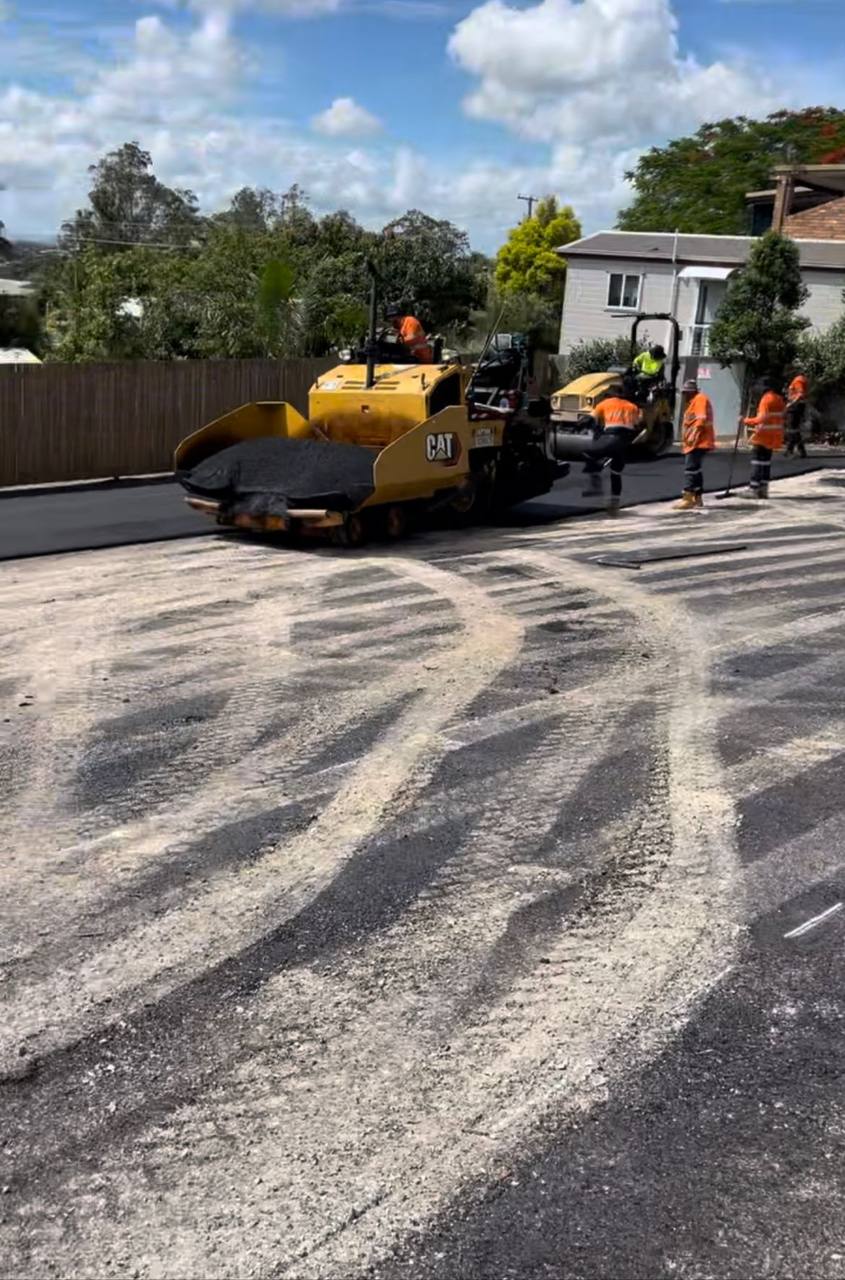
Reconstruction involves more substantial work. It may require removing or rebuilding deteriorated pavement layers before the road is reshaped, compacted and prepared for its finished surface.
The decision therefore depends on whether the problem is mainly at surface level or whether the pavement structure itself has lost strength.
Signs That Road Grading May Be Appropriate
Grading can be effective where the road still has a reasonably stable underlying structure but its surface profile has deteriorated.
Typical problems that may be improved through grading include:
- Corrugations across the road
- Shallow wheel ruts
- Minor potholes
- Loose or displaced surface material
- Uneven sections
- Poorly formed surface falls
- Minor drainage issues caused by loss of road shape
In these situations, reshaping and compacting the road may restore more consistent access without rebuilding the complete pavement.
When Corrugations Are the Main Problem
Corrugations can develop as repeated vehicle movements displace surface material. Once established, they can make a road increasingly uncomfortable to drive on.
Where sufficient suitable material remains and the underlying pavement is stable, professional grading can remove these irregularities and restore a more consistent profile.
However, if corrugations return rapidly after repeated grading, it is worth investigating whether a deeper pavement issue is contributing to the problem.
Shallow Rutting Can Often Be Corrected
Wheel paths can gradually become lower than surrounding sections as traffic repeatedly travels along the same part of a road.
If rutting is relatively shallow and has not resulted from significant failure of the base, grading may be able to redistribute material and restore the road shape.
Deep rutting accompanied by soft or unstable pavement requires closer investigation.
When Reconstruction May Be Necessary
Reconstruction becomes more likely when the pavement has deteriorated beyond the point where reshaping the surface will provide a dependable result.
Warning signs can include:
- Deep and widespread rutting
- Large areas of unstable pavement
- Extensive pothole development
- Significant settlement
- Severe erosion or washouts
- Repeated failure shortly after maintenance
- Base material that moves significantly under traffic
These problems suggest that the road may no longer have sufficient structural support.
Repeated Grading Is Not Always the Answer
One useful indicator is how long the road remains serviceable after being graded.
If grading restores the road and it continues to perform reasonably well, routine grading may remain appropriate. If potholes, ruts and depressions return very quickly, repeatedly reshaping the same material may not address the actual cause.
The problem could involve insufficient pavement depth, unsuitable materials, poor drainage or a weakened foundation.
In these circumstances, investigating the underlying structure becomes more important than simply grading the surface again.
Look for Soft or Pumping Areas
A road surface that moves noticeably beneath vehicles can indicate that the pavement or ground below has become unstable.
Soft sections can be particularly problematic after wet conditions. Repeated vehicle loads may push material aside, creating increasingly deep wheel tracks and deformation.
Grading can temporarily level these areas, but if the underlying weakness remains, the same deformation is likely to return. Reconstruction of affected sections may therefore be required to restore adequate support.
What Do Recurring Potholes Tell You?
Potholes can occur for several reasons, so their presence alone does not automatically mean reconstruction is necessary.
A few shallow potholes on an otherwise stable road may be addressed during maintenance and grading. The situation becomes more concerning when potholes:
- Appear throughout large sections of road
- Become progressively deeper
- Return soon after repairs
- Develop alongside significant rutting
- Occur where water regularly collects
The pattern of deterioration often provides more useful information than any single defect.
Drainage Can Determine Which Solution Is Needed
Poor drainage can make both surface and structural road problems considerably worse.
When water remains on the road or penetrates weakened pavement areas, supporting materials can lose stability. Runoff can also erode shoulders and wash material away.
If the pavement remains structurally sound, correcting the road profile through grading may restore effective drainage. Where prolonged moisture has already caused substantial base failure, deeper reconstruction may be required.
This is why drainage should be assessed alongside the visible road condition.
Heavy Traffic Can Change the Requirements
The vehicles using the road also influence the decision.
A road carrying regular heavy vehicles or machinery requires sufficient pavement strength to distribute those loads. If the road was not originally constructed for its current traffic demands, repeated grading may improve the surface without solving the underlying structural limitation.
Assessing current and expected traffic helps determine whether the existing road structure remains fit for purpose.
Can Only Part of the Road Be Reconstructed?
Not every road with structural deterioration necessarily requires complete reconstruction from end to end.
Sometimes most of the pavement remains stable while particular sections have failed because of drainage, concentrated traffic or localised ground conditions. Those areas may require deeper reconstruction while other sections need only grading and maintenance.
A professional assessment can identify whether deterioration is:
- Surface-level or structural
- Localised or widespread
- Related to drainage
- Caused by traffic loading
- Connected to inadequate pavement materials
This avoids treating every section of road in exactly the same way.
Why a Professional Road Assessment Matters
It can be difficult to determine pavement condition simply by looking at the surface. A rough road may still have a serviceable foundation, while a relatively modest depression could indicate weakness underneath.
An experienced contractor considers the road as a complete system, including its profile, pavement condition, drainage and traffic requirements.
The objective is not to recommend the most extensive work. It is to identify the level of intervention needed to restore dependable performance.
Conclusion
A road may be suitable for grading when deterioration is primarily limited to corrugations, shallow rutting, minor potholes, displaced material or loss of the correct surface profile. Reconstruction becomes more likely when there is deep deformation, widespread instability, recurring failure or significant deterioration within the pavement structure itself.
For property owners and businesses in Jimboomba, QLD, Jimboomba Surfacing Solutions can assess existing road conditions and determine whether grading, targeted reconstruction or more extensive pavement work is appropriate. If your road is becoming increasingly difficult to maintain, a professional assessment can help identify the underlying cause and establish the most suitable way forward.
Call us on: 07 3113 9392
Click here to find out more about Jimboomba Surfacing Solutions
Click here to complete our contact form and see how we can help with your driveways.