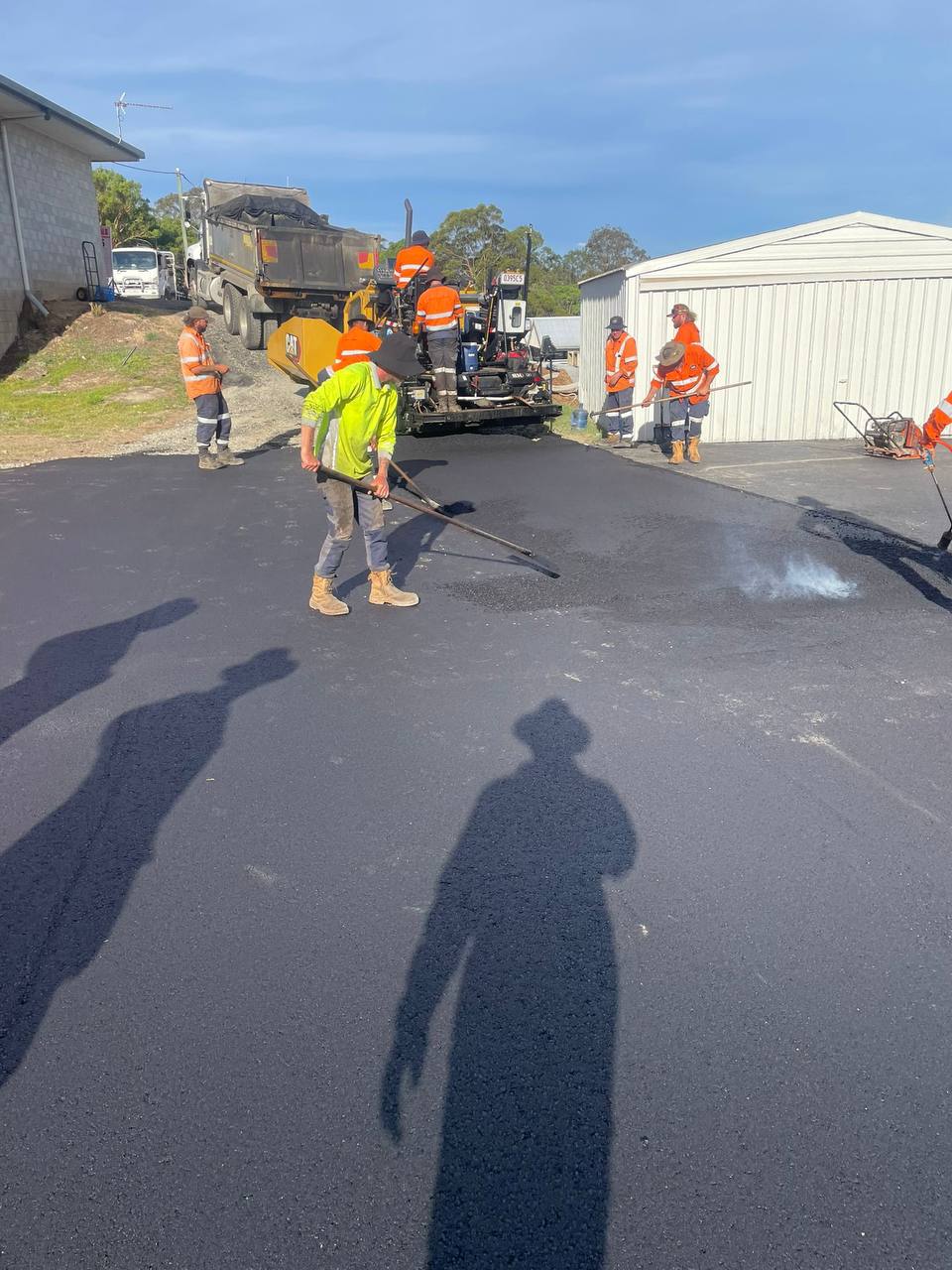
A driveway and a hardstand may both use asphalt or bitumen surfacing, but they are designed to perform very different jobs. A typical driveway primarily provides vehicle access between an entrance and a property, while a hardstand may need to support heavy vehicles, machinery, stored equipment and repeated loading in concentrated areas.
These differences mean that simply constructing a larger version of a standard driveway is not necessarily suitable for a hardstand. The pavement structure, base preparation, drainage, surface design and expected traffic all need to reflect how the area will actually be used.
At Jimboomba Surfacing Solutions, we provide professional asphalt, bitumen and hardstand surfacing throughout Jimboomba, QLD. Understanding the demands placed on each site allows the pavement to be constructed for reliable long-term performance rather than relying on a one-size-fits-all approach.
The Main Difference Is How the Surface Will Be Used
Most driveways experience relatively predictable vehicle movements. Cars and light commercial vehicles generally enter, travel across the surface and leave again.
Hardstands can experience much more demanding operating conditions. Depending on their purpose, they may be used for:
- Heavy vehicle parking
- Machinery storage
- Loading and unloading
- Commercial vehicle movements
- Equipment operation
- Frequent turning and manoeuvring
- Repeated stationary loads
The pavement therefore needs to withstand not only moving traffic but also concentrated loads applied repeatedly to the same areas.
Vehicle Weight Changes Pavement Requirements
Vehicle loading is one of the most important differences between a driveway and a hardstand.
A pavement does not only support the weight visible at the surface. Vehicle loads need to be distributed through the asphalt or bitumen and into the supporting pavement layers underneath.
Heavy vehicles and machinery place considerably greater demands on these layers than normal passenger vehicles.
If a hardstand is constructed without sufficient structural capacity, the pavement may eventually develop:
- Rutting
- Depressions
- Cracking
- Surface deformation
- Localised settlement
- Potholes
The expected vehicle types and operating conditions should therefore be considered before construction begins.
Hardstands Often Experience Stationary Loads
Driveways are primarily designed for vehicles moving across them. Hardstands may have heavy vehicles, machinery or equipment remaining in the same position for extended periods.
These stationary loads can place concentrated pressure on particular sections of pavement.
If the supporting layers are inadequate, the surface can gradually deform beneath frequently loaded areas. This is one reason hardstand design needs to consider operational use in more detail than a typical driveway.
Turning Movements Create Additional Stress
Heavy vehicles do not simply travel in straight lines across hardstands. They often turn, reverse, brake and manoeuvre within relatively confined spaces.
These movements can create additional stresses at the pavement surface.
Particular attention may be needed around:
- Entry and exit points
- Loading areas
- Turning zones
- Parking positions
- Frequently travelled wheel paths
Understanding these traffic patterns allows the pavement to be prepared for where the greatest demands are likely to occur.
Base Preparation Becomes Even More Important
The visible asphalt or bitumen is only one part of a successful hardstand.
Much of the pavement’s strength comes from the supporting layers beneath the surface. These layers need to provide a stable foundation capable of distributing the expected loads.
Professional preparation may involve assessing existing ground conditions, removing unsuitable material, installing appropriate pavement materials, grading the site and compacting each layer correctly.
Insufficient base preparation can allow movement beneath the finished surface, eventually resulting in cracking, rutting and deformation.
Compaction Is Critical
Compaction helps create a dense, stable pavement structure.
Poorly compacted material can settle unevenly when heavy vehicles begin using the hardstand. This can produce depressions and movement even when the surface initially appears satisfactory.
Correct compaction during construction helps the pavement support loads more consistently.
Drainage Specifications Can Also Differ
Hardstands are often relatively large paved areas, which means significant amounts of water may need to be directed away during rainfall.
Surface levels and falls need to be carefully planned so water does not collect around loading zones, parking areas or frequently travelled sections.
Effective grading helps reduce:
- Standing water
- Moisture penetration
- Softening of pavement layers
- Localised deterioration
- Pothole development
Drainage should therefore be considered during the initial hardstand design rather than addressed only after water problems become apparent.
Hardstand Size Influences Surface Design
A larger paved area requires careful consideration of levels across the entire site.
Small inconsistencies that might have limited impact on a short driveway can create substantial drainage or operational problems across a large hardstand.
Professional grading helps establish a consistent surface profile while ensuring vehicles can move efficiently between different parts of the site.
Transitions between the hardstand, access roads and surrounding surfaces also need to be appropriately constructed.
The Surface Must Suit Operational Demands
Asphalt and bitumen can both provide effective surfacing solutions, but the appropriate pavement specification depends on the site’s requirements.
Factors that should be considered include:
- Expected vehicle weights
- Traffic frequency
- Turning movements
- Stationary loading
- Existing ground conditions
- Drainage
- Intended use of the area
Professional assessment allows the surfacing solution to be matched to these demands rather than applying the same specification to every project.
Why Standard Driveway Construction May Not Be Enough
A driveway built for normal passenger vehicle use may perform extremely well for its intended purpose. Problems can arise when that same pavement structure is expected to accommodate frequent heavy vehicles or machinery.
The surface may initially appear capable of carrying the additional traffic, but repeated loading can gradually expose weaknesses underneath.
Common warning signs include wheel-track depressions, cracking around turning areas and localised settlement where vehicles regularly stop.
Building the pavement for its intended use from the outset provides a much stronger basis for long-term performance.
Hardstands Need to Support Efficient Operations
A professionally constructed hardstand does more than carry vehicles. It contributes to the everyday functionality of the property.
A stable, well-designed surface allows vehicles and machinery to move more predictably while providing dependable areas for parking, loading and equipment use.
Uneven or deteriorated hardstands can interfere with these activities, particularly where potholes, rutting or water pooling develop in heavily used areas.
Correct pavement specifications help keep the surface functional under the conditions it was built to accommodate.
Future Use Should Be Considered During Planning
It is also worth considering how the hardstand may be used in the future.
If heavier vehicles, additional machinery or increased traffic are reasonably expected, these demands should be considered during pavement planning. Designing only for current minimum requirements can leave a surface struggling if operational demands increase significantly.
A professional contractor can discuss intended traffic and site use before determining the appropriate preparation and surfacing approach.
Why Professional Hardstand Construction Matters
Hardstand construction requires more than creating a large, flat paved area.
An experienced surfacing contractor considers the relationship between ground conditions, base preparation, compaction, drainage, traffic movements and the finished surface. Each element needs to support the others if the pavement is to perform reliably.
For properties in Jimboomba, QLD, having these requirements assessed before construction helps ensure the finished hardstand is designed around its actual operating conditions.
Conclusion
Hardstands need different specifications from driveways because they generally face greater and more concentrated demands. Heavy vehicles, stationary equipment, turning movements and frequent commercial use can place substantial stresses on both the surface and the pavement layers underneath.
A successful hardstand therefore requires careful planning, suitable base preparation, thorough compaction, effective drainage and a surfacing specification matched to its intended use. Treating a hardstand as simply an oversized driveway can overlook the structural requirements that determine its long-term performance.
At Jimboomba Surfacing Solutions, we provide professional hardstand construction, asphalt and bitumen surfacing throughout Jimboomba, QLD. If you are planning a new hardstand or need to upgrade an existing working surface, contact our team to discuss a pavement solution designed around the traffic, equipment and operational requirements of your property.
Call us on: 07 3113 9392
Click here to find out more about Jimboomba Surfacing Solutions
Click here to complete our contact form and see how we can help with your driveways.